
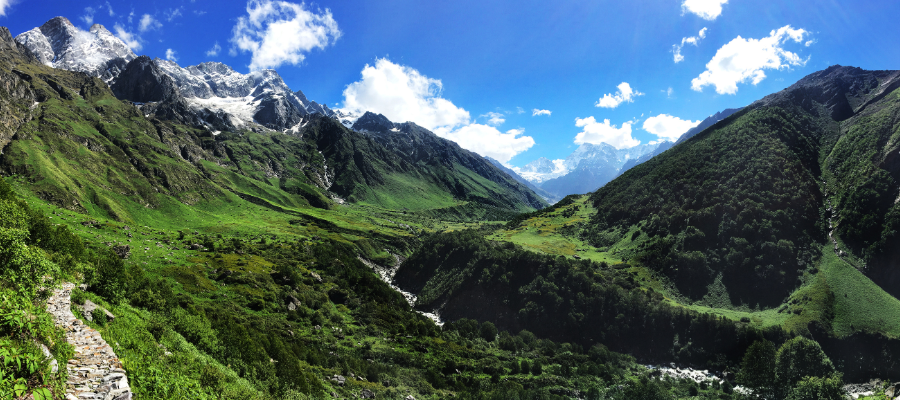
The Valley of Flowers, located in the Chamoli district of Uttarakhand, India, is a mesmerizing national park known for its stunning meadows and vibrant alpine flowers. Spread across an area of about 87 square kilometers (33.5 square miles) and nestled at an altitude of 3,600 meters (11,800 feet), it is a UNESCO World Heritage Site.The valley is a paradise for nature enthusiasts and botanists, housing a vast variety of alpine flowers, including primulas, orchids, poppies, and daisies. During the monsoon season, the valley blooms with a kaleidoscope of colors, creating a breathtaking sight.Apart from the floral beauty, the Valley of Flowers is surrounded by snow-capped peaks, dense forests, and gushing streams. It offers picturesque hiking trails and panoramic views of the Himalayas, making it a haven for trekkers.The valley is also home to diverse wildlife, including snow leopards, musk deer, Himalayan black bears, and various species of birds.Access to the Valley of Flowers is restricted to protect its fragile ecosystem, and permits are required to enter. The enchanting beauty and serene atmosphere of the Valley of Flowers make it a must-visit destination for nature lovers seeking to witness the extraordinary floral splendor of the Himalayas.
About this place
History & highlights
The history of The Valley of Flowers is intertwined with local folklore and mythology. According to legend, the valley was rediscovered by British mountaineer Frank Smythe in 1931, who was mesmerized by its beauty and diverse flora. However, the valley's existence was known to locals for centuries, who considered it a sacred place associated with mythological tales of gods and goddesses.Nestled in the western Himalayas, The Valley of Flowers is situated at an altitude of about 3,500 to 6,500 meters above sea level. It is flanked by snow-capped peaks and lush green meadows, creating a breathtaking panorama. The valley experiences a cool and temperate climate during the summer months, ideal for the growth of a wide range of flowers.Apart from its floral splendor, the valley is also home to diverse wildlife, including Himalayan bears, snow leopards, musk deer, and a variety of birds and butterflies. Conservation efforts have been initiated to protect this fragile ecosystem, ensuring the preservation of its unique biodiversity.Access to The Valley of Flowers is regulated to minimize environmental impact. Visitors can embark on a trek from Govindghat or Joshimath, passing through picturesque landscapes and crossing the Pushpawati River. The best time to visit is from July to September when the flowers are in full bloom, creating a surreal and enchanting atmosphere.
Reviews
No reviews yet. Click “Write a Review” above to share your experience.