
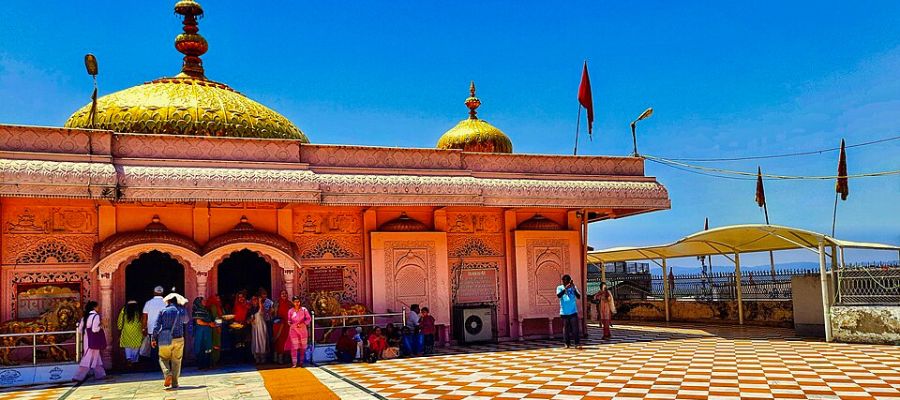
The Jwala Ji Temple at Jawalamukhi is unique among Indian shrines because the goddess is worshipped not as an idol but as a set of natural blue–orange flames emerging from rock fissures inside a temple chamber. Devotees see these flames as the mouth or tongue of the goddess herself, constantly fed with ghee and offerings by priests. The complex has several flame-points (jyotis), a main sanctum, outer mandapas, and courtyards filled with bells and red flags. Situated on a hill surrounded by low ridges, it draws both pilgrims and curious visitors fascinated by the meeting of geology and faith.
About this place
History & highlights
Jwala Ji is counted among the 51 Shakti Peethas, believed to mark the place where Sati’s tongue fell. The temple’s flames have been documented for many centuries; medieval chronicles mention shrines where fire naturally issues from the earth, and Firuz Shah Tughlaq is said to have had Hindu texts from here translated into Persian when the Delhi Sultanate extended control over Kangra. Various kings – from local rajas to Maharaja Ranjit Singh – offered gold and silver to the temple, considering it a powerful seat of Shakti. In modern times scientists explain the phenomenon as natural gas seepage igniting on contact with air, but the mystery and continuity of the flames still inspire awe. Jwala Ji thus stands at a rare crossroads where ancient myth, royal patronage and earth science all focus on a single sacred fire.
Reviews
No reviews yet. Click “Write a Review” above to share your experience.