
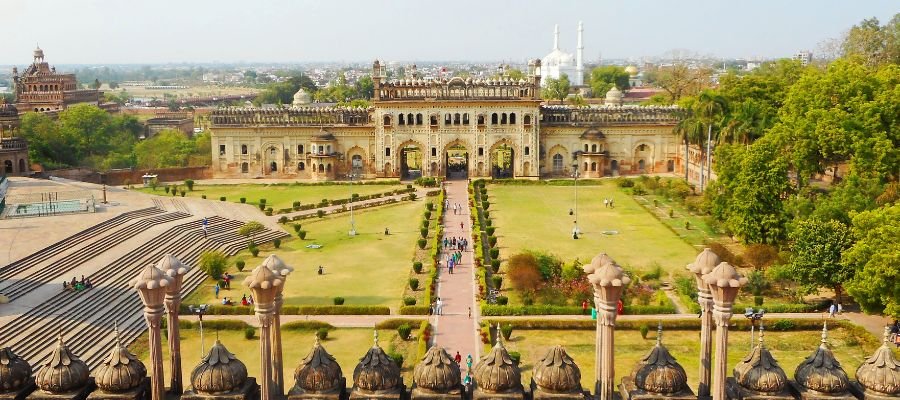
Bara Imambara, also called Asafi Imambara, is one of Lucknow’s signature monuments and an impressive symbol of Awadhi architecture and culture. The complex features a vast central hall with a high arched roof, a serene courtyard, a baoli (step-well), and the famous “Bhulbhulaiya,” a maze of narrow, interconnected corridors on the upper level. Visitors climb up to enjoy panoramic views of Lucknow’s skyline and explore the labyrinth, while the main hall remains a place of religious gathering for the Shia community, especially during Muharram. The structure’s scale, elegant stucco ornamentation and absence of iron or timber beams make it an architectural marvel.
About this place
History & highlights
Bara Imambara was commissioned by Nawab Asaf-ud-Daula in 1784 during a severe famine in Awadh. The project was partly conceived as a large-scale relief measure: thousands of labourers and artisans were given work on the Imambara complex so that no one would go hungry. Over several years, the building took shape using traditional techniques, with its massive vaulted hall constructed entirely with interlocking masonry rather than metal girders. Over time, Bara Imambara became a symbol of Lucknow’s refined culture—its tehzeeb, architecture and Shia traditions. Though built as a congregation hall and not a mosque, the complex has remained an important centre for religious gatherings and a major stop on every heritage tour of Lucknow.
Reviews
No reviews yet. Click “Write a Review” above to share your experience.