
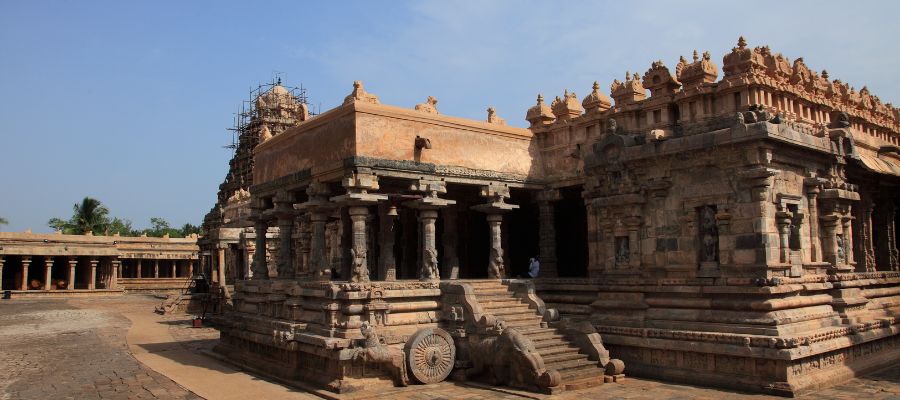
Introduction: A Masterpiece of Chola Temple Architecture
Airavatesvara Temple is one of the most remarkable Chola-era temples in Tamil Nadu, located in Darasuram near Kumbakonam. Dedicated to Lord Shiva as Airavatesvara, the temple is celebrated for its architectural refinement, sculptural detail, and historical importance. Along with the Brihadeeswarar Temple at Thanjavur and the Gangaikonda Cholapuram Temple, it forms part of the UNESCO-recognised “Great Living Chola Temples,” highlighting its global cultural significance.
For devotees, the temple is a sacred Shaivite shrine. For historians and travellers, it represents the artistic peak of Chola craftsmanship and temple planning, making it one of the most important heritage monuments in South India.
Historical Origins and Chola Patronage
The Airavatesvara Temple was constructed during the reign of the Chola emperor Rajaraja Chola II in the 12th century. The Chola dynasty, known for its patronage of temple architecture and arts, built the temple as a statement of religious devotion and imperial prestige.
The temple’s name is associated with Airavata, the divine white elephant of Lord Indra, who is believed to have worshipped Shiva at this site. This mythological association adds depth to the temple’s religious identity, while historical inscriptions provide detailed information about Chola administration, temple rituals, and social life.
Over centuries, the temple received contributions from later dynasties such as the Pandyas and Vijayanagara rulers, who undertook renovations and additions. Despite political changes, the temple remained a significant religious and cultural centre in the Kaveri delta region.
Architecture and Sacred Space
Architecturally, the Airavatesvara Temple is a refined example of Dravidian temple architecture. Unlike the monumental scale of earlier Chola temples, this temple is noted for its intricate detailing and balanced proportions.
The temple complex features a beautifully carved mandapa resembling a stone chariot, supported by sculpted pillars and mythical animal figures. The musical steps at the entrance, which produce different notes when tapped, demonstrate the advanced artistic and engineering knowledge of the Chola craftsmen.
The main sanctum houses the Shiva lingam, while surrounding shrines and corridors display elaborate sculptures depicting deities, dancers, musicians, and scenes from epics. The temple walls are adorned with inscriptions that document donations, rituals, and administrative practices.
Religious and Cultural Importance
Airavatesvara Temple holds significant importance in the Shaivite tradition. It has long served as a centre of worship for local communities and pilgrims visiting the Kumbakonam region.
Festivals, daily rituals, and special ceremonies continue to be conducted according to traditional temple practices. The temple also reflects the integration of religion with art, music, and social life in Chola society.
Beyond its religious role, the temple stands as a key monument in the history of Indian architecture. Its sculptures and structural design influenced later temple-building traditions across South India.
Experience for Visitors and Travellers
For visitors, Airavatesvara Temple offers a rich experience of art, history, and devotion. Architecture enthusiasts admire the precision of carvings and the elegance of proportions, while cultural travellers explore the narratives embedded in sculptures and inscriptions.
Tourists often include the temple in heritage circuits around Kumbakonam and Thanjavur. The calm environment and detailed artwork encourage slow exploration, allowing visitors to appreciate the temple’s artistic complexity.
The temple’s status as a UNESCO World Heritage Site has increased its visibility among international travellers and scholars.
Role in Tamil Nadu’s Heritage Tradition
Airavatesvara Temple plays a significant role in Tamil Nadu’s architectural and cultural history. It represents the mature phase of Chola temple architecture, where artistic sophistication reached its peak.
The temple also contributes to the identity of the Kaveri delta as a historic centre of temple-building, literature, and religious practice. Its preservation highlights the continuity of South India’s temple traditions across centuries.
Airavatesvara Temple in the Modern Era
In the modern era, Airavatesvara Temple is preserved and maintained as a protected monument under the Archaeological Survey of India. Conservation efforts focus on safeguarding its sculptures, inscriptions, and structural integrity.
The temple attracts devotees, heritage tourists, historians, and researchers from India and abroad. Improved infrastructure and tourism initiatives have enhanced accessibility to Darasuram, integrating the temple into broader cultural tourism routes.
At the same time, the temple continues to function as a living place of worship, where ancient rituals coexist with modern visitor activity. Its enduring relevance lies in its ability to connect Chola artistic heritage with contemporary cultural and religious life.