
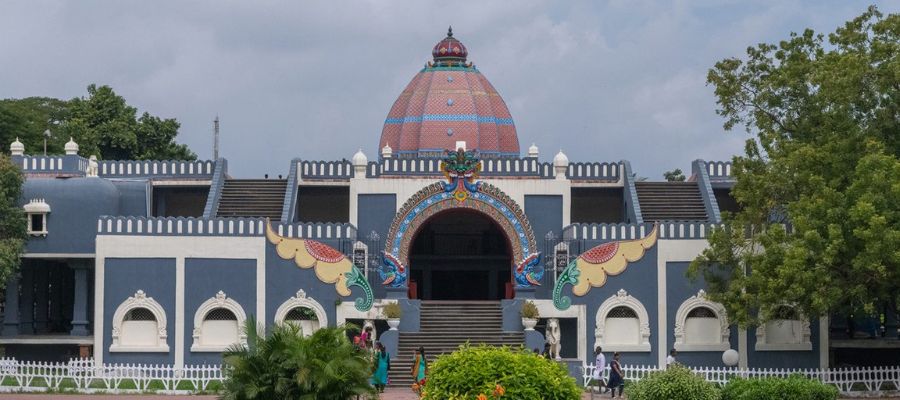
Introduction: Monument to Tamil Wisdom
Valluvar Kottam is one of Chennai’s most meaningful cultural landmarks, dedicated to the classical Tamil poet-sage Thiruvalluvar, the author of the ancient masterpiece Thirukkural. Located in the heart of the city, this monument is not just a tourist attraction but a symbol of Tamil language, philosophy, and intellectual heritage. Unlike temples or colonial buildings, Valluvar Kottam represents literary pride and cultural identity, making it a unique landmark in Chennai’s urban landscape.
For visitors, Valluvar Kottam offers an experience that combines architecture, literature, and cultural memory. It stands as a reminder that Chennai’s identity is shaped not only by religion and commerce but also by centuries of poetic and ethical thought.
Thiruvalluvar and the Legacy of the Thirukkural
Thiruvalluvar is one of the most revered figures in Tamil civilisation. His work, the Thirukkural, consists of 1,330 couplets that explore ethics, governance, love, and human conduct. Written more than two thousand years ago, the Thirukkural remains relevant across cultures and eras, often compared to global philosophical texts for its universality and moral depth.
Valluvar Kottam was conceived as a tribute to this timeless wisdom. By commemorating Thiruvalluvar in monumental form, the site transforms literary heritage into a physical space that people can visit, experience, and reflect upon.
Architectural Design and Symbolism
The architecture of Valluvar Kottam is deeply symbolic. The most striking feature is the massive chariot-shaped structure that dominates the complex. Inspired by temple chariots used in South Indian festivals, this stone chariot symbolises movement, tradition, and the journey of knowledge. The statue of Thiruvalluvar stands majestically atop the chariot, overlooking the city as a guardian of Tamil values.
Surrounding the central monument is a large auditorium and gallery space. The walls of the complex are inscribed with all 1,330 couplets of the Thirukkural, engraved in Tamil script. This makes Valluvar Kottam not only a monument but also a living book of Tamil literature carved in stone.
Cultural and Educational Significance
Valluvar Kottam plays a crucial role in promoting Tamil culture and education. It is a venue for literary events, cultural programmes, debates, and performances. Students, scholars, and language enthusiasts visit the site to engage with Tamil heritage in a tangible way.
For many visitors, reading the engraved couplets becomes a reflective journey. The verses address universal themes such as virtue, justice, love, and social responsibility, allowing people from different backgrounds to connect with ancient wisdom.
The monument also serves as a cultural bridge between generations. While older visitors appreciate its literary significance, younger audiences encounter Thiruvalluvar’s teachings in a modern urban setting, ensuring the continuity of Tamil intellectual tradition.
Experience for Visitors and Tourists
For tourists, Valluvar Kottam offers a different dimension of Chennai. While beaches, temples, and malls reveal the city’s physical and economic character, Valluvar Kottam reveals its intellectual and linguistic soul. Visitors can walk through the complex, admire the architecture, and explore the philosophical messages embedded in the walls.
The open spaces and calm atmosphere make it a pleasant stop in a city itinerary. Photographers are drawn to the monumental chariot and symmetrical design, while history lovers appreciate the blend of ancient literature and modern architecture.
Role in Chennai’s Urban Identity
Chennai is often described as the cultural capital of South India, known for classical music, dance, and Tamil scholarship. Valluvar Kottam embodies this identity in architectural form. It stands as a public statement of the city’s commitment to preserving and celebrating Tamil heritage.
In an era of rapid urbanisation and globalisation, Valluvar Kottam serves as a counterbalance, reminding citizens of their linguistic roots and ethical traditions. The monument’s presence in a busy urban area symbolises the coexistence of tradition and modernity.
Valluvar Kottam in the Modern Era
Today, Valluvar Kottam continues to function as a cultural landmark and public space. It attracts school groups, tourists, cultural organisations, and everyday visitors. The site remains relevant not only as a memorial but as an active centre of cultural expression.
At the same time, Valluvar Kottam reflects the evolving role of monuments in modern cities. Rather than being static relics, it serves as a dynamic space where heritage is continually interpreted and reimagined.