
Introduction and Emotional Significance
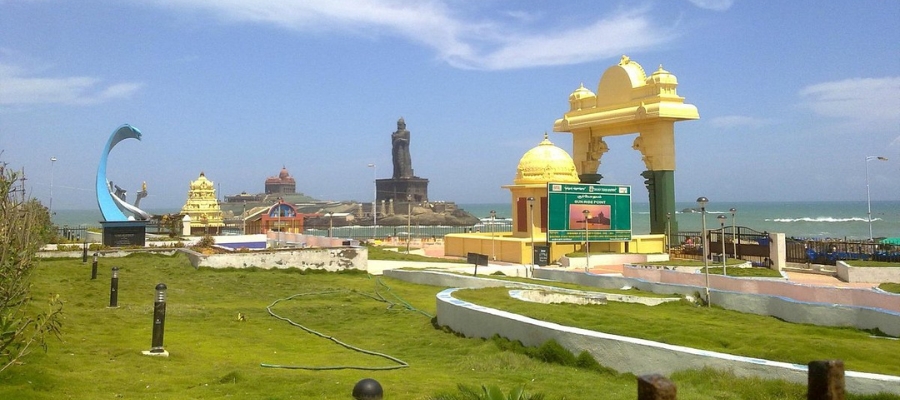
The Tsunami Memorial in Kanyakumari is one of the most moving and meaningful landmarks in the town. Built in memory of the victims of the 2004 Indian Ocean tsunami, the memorial stands near the seashore as a symbol of remembrance, loss, and human resilience. Unlike monuments created to celebrate victories or rulers, this memorial exists to honour ordinary lives affected by an extraordinary natural disaster.
For visitors, the Tsunami Memorial offers a quiet moment of reflection within Kanyakumari’s vibrant coastal landscape. Surrounded by the sound of waves and the open horizon, it reminds travellers that the same sea that attracts millions with its beauty can also hold immense destructive power. The memorial transforms the coastline into a space of memory, making it not only a tourist attraction but also a site of collective emotion and historical awareness.
Background: The 2004 Indian Ocean Tsunami
On 26 December 2004, a massive undersea earthquake off the coast of Sumatra triggered one of the deadliest tsunamis in modern history. The giant waves swept across the Indian Ocean, affecting several countries, including Indonesia, Sri Lanka, Thailand, and India. Kanyakumari, located at the southern tip of India, was among the regions impacted by the disaster.
The tsunami caused widespread destruction along the Tamil Nadu coastline, claiming thousands of lives and devastating coastal communities. Fishermen, families, and residents living near the shore were suddenly confronted with unimaginable loss. The Tsunami Memorial was later built to commemorate those who lost their lives and to ensure that the memory of the tragedy is not forgotten.
Design and Symbolism of the Memorial
The architecture of the Tsunami Memorial is simple yet deeply symbolic. Rather than grand decorative elements, the memorial emphasises clarity, solemnity, and emotional impact. Its design reflects the themes of memory, loss, and endurance, allowing visitors to connect with the tragedy on a human level.
The memorial’s location near the sea is intentional. Standing close to the waves, it visually links the monument with the event it commemorates. The contrast between the calm present-day sea and the memory of destruction creates a powerful emotional experience. Visitors often pause here not for entertainment but for contemplation, making the memorial a rare space of silence amid Kanyakumari’s bustling tourist environment.
Role in Kanyakumari’s Coastal Landscape
Kanyakumari is widely known for its spiritual landmarks, monuments, and scenic beauty. In this context, the Tsunami Memorial adds a layer of modern history to the town’s identity. It connects natural beauty with human vulnerability, reminding visitors that landscapes are shaped not only by geography but also by events and experiences.
Located near popular tourist routes and beaches, the memorial is easily accessible to travellers. Many visitors encounter it while exploring the seafront, making it a natural stop in their journey. Its presence ensures that Kanyakumari’s coastline is not perceived only as a picturesque destination but also as a site of historical memory.
Experience for Visitors and Travellers
For travellers, the Tsunami Memorial offers a different kind of experience compared to temples, statues, or viewpoints. Instead of visual spectacle, it provides emotional depth. Visitors often spend a few quiet moments here, reading inscriptions, observing the sea, and reflecting on the fragility of life.
The memorial appeals particularly to those interested in recent history and social realities. While Kanyakumari’s monuments often narrate ancient or colonial stories, the Tsunami Memorial tells a contemporary story—one that many people still remember. This immediacy makes the memorial especially powerful.
For photographers, the site offers a subtle yet meaningful visual composition. The monument against the vast sea creates images that are not just scenic but symbolic, capturing the intersection of nature, memory, and human experience.
Educational and Social Significance
Beyond tourism, the Tsunami Memorial serves an important educational purpose. It raises awareness about natural disasters, coastal vulnerability, and the need for preparedness and resilience. For students and younger visitors, the memorial becomes a visual reminder of the impact of environmental forces on human societies.
Socially, the memorial represents collective mourning and solidarity. It honours not only those who died but also the strength of communities that rebuilt their lives after the disaster. In this sense, the memorial is not only about tragedy but also about recovery and hope.
Symbol of Resilience and Memory
The Tsunami Memorial symbolises Kanyakumari’s resilience in the face of adversity. While the tsunami caused immense destruction, the region gradually rebuilt itself, continuing its cultural and economic life. The memorial stands as a testament to this journey from loss to recovery.
In a town often associated with spiritual calm and scenic beauty, the memorial introduces a narrative of struggle and endurance. It reminds visitors that history is not only shaped by kings and empires but also by natural events and human responses.
Tsunami Memorial in the Present Day
Today, the Tsunami Memorial remains one of Kanyakumari’s most meaningful modern monuments. It attracts tourists, locals, and history enthusiasts who seek to understand the town beyond its postcard image. While many visitors stop briefly, the emotional impact of the site often leaves a lasting impression.
As Kanyakumari continues to evolve as a tourist destination, the Tsunami Memorial retains its relevance as a space of remembrance within a landscape of leisure. It bridges the gap between beauty and tragedy, tourism and memory, nature and humanity.
Ultimately, the Tsunami Memorial is more than a monument—it is a reminder of vulnerability, resilience, and collective memory. For visitors, it offers a quiet yet powerful moment in their journey through Kanyakumari, transforming a scenic coastline into a space of reflection and historical consciousness.