
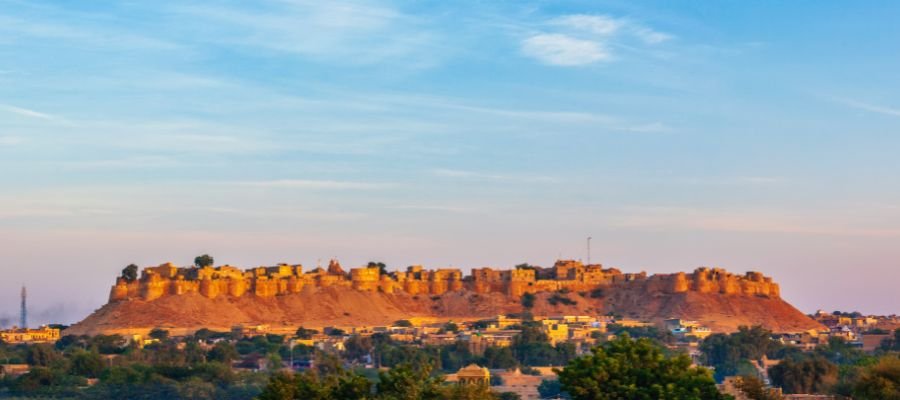
Jaisalmer Fort rises directly from Trikuta Hill like a giant golden crown above the Thar Desert. Its yellow sandstone battlements shine tawny in daytime and turn honey-gold at sunset, which is why people call it Sonar Quila / Golden Fort. Inside the walls it’s not just a monument but a living fort – with temples, havelis, homes, guesthouses and shops packed into winding lanes. From the ramparts you see endless desert, the modern town, Gadisar Lake and windmills in the distance, while inside you move from royal palace sections to Jain temples, tiny cafés and rooftop viewpoints. At night the lit-up walls look like a floating golden city in the dark desert.
About this place
History & highlights
The fort was built in 1156 CE by Bhati Rajput ruler Rawal Jaisal, who shifted his capital here from Lodurva and gave his name to the city. Strategically located on caravan routes linking India with Central Asia and the Middle East (branches of the old Silk Road), it grew rich on trade taxes and protection money. Over centuries Jaisalmer Fort saw sieges, battles and shifting alliances with Delhi Sultans and the Mughals, but it remained the stronghold of the Bhati rulers. Unlike many forts, people still live inside its walls, making it one of the world’s few “living forts.” In 2013 it was inscribed as part of the UNESCO World Heritage Site “Hill Forts of Rajasthan,” yet today it also faces stress from drainage, tourism pressure and surrounding construction – issues that conservation agencies and government are actively trying to manage.
Reviews
No reviews yet. Click “Write a Review” above to share your experience.