
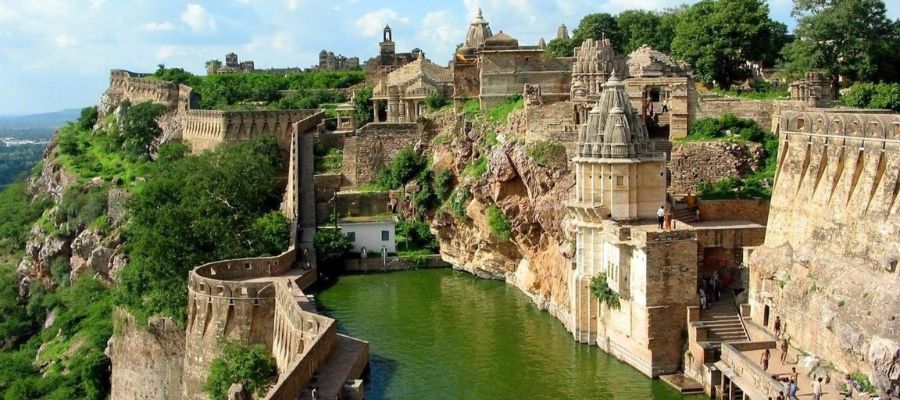
Chittorgarh Fort spreads over around 700 acres on a high rocky plateau, its walls and bastions running along the cliff like a stony crown above the modern town. The approach road climbs through seven massive gateways (pols) before opening onto a wide hilltop dotted with palaces, water tanks, temples, towers and gardens. From many points you see green fields below, the Gambhiri and Berach rivers, and the town wrapped around the hill. Inside are landmarks like Vijay Stambh, Kirti Stambh, Rana Kumbha Palace, Padmini Palace, Gaumukh reservoir, Meera Temple, Kalika Mata Temple and many smaller shrines and kunds, so the fort feels more like a ruined city than a single building.
About this place
History & highlights
The fort’s origins go back at least to the 7th–8th century CE. It is traditionally associated with Maurya ruler Chitrangada Mori, from whom the name Chittor is said to derive. From the 8th century onward it became the capital of the Guhila (Guhilot) Rajputs, later known as the Sisodias of Mewar, who ruled from here until the 16th century. The fort saw three major sieges remembered for Rajput resistance and jauhar: 1303 (Alauddin Khalji), 1535 (Bahadur Shah of Gujarat), and 1567–68 (Akbar). After repeated devastation, Maharana Udai Singh II shifted the capital to Udaipur, but Chittorgarh remained a symbol of Mewar’s honour. In 2013 it was inscribed as part of the UNESCO World Heritage serial site “Hill Forts of Rajasthan,” recognised for representing Rajput military architecture and heroic tradition.
Reviews
No reviews yet. Click “Write a Review” above to share your experience.