
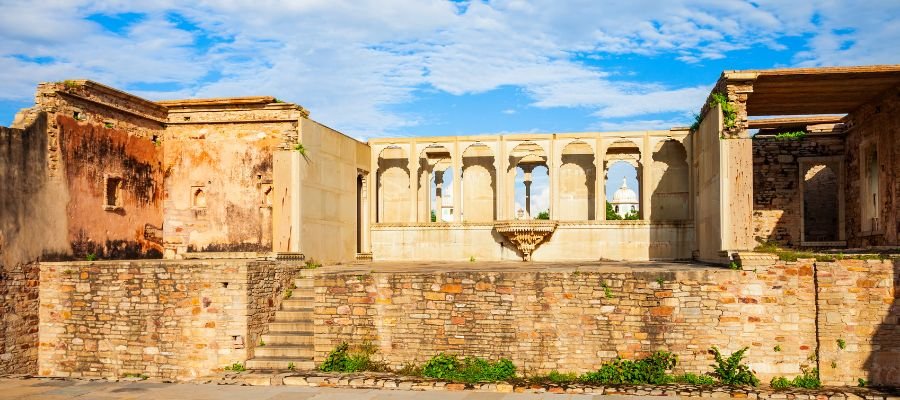
Near the main entrance of the fort lie the extensive ruins of Rana Kumbha Palace—stone platforms, courtyards, underground chambers and broken walls that once formed the royal residential complex. From some angles you see tall remnants of halls and gateways; from others, you look down into subterranean rooms connected by narrow passages. The palace compound is also linked in local memory to the jauhar kunds where royal women are believed to have performed mass self-immolation during sieges. Standing here, with views towards the plains, you can almost imagine how it functioned as the living nerve centre of Mewar’s capital.
About this place
History & highlights
The original palace structures date largely from the 15th century, built and expanded under Rana Kumbha (r. 1433–1468). He ruled during a high point of Mewar power, commissioning not only fortifications and this palace but also temples and the Vijay Stambh. Over time, subsequent rulers modified the complex. The palace is also associated with figures like Rana Sanga and the childhood of Maharana Udai Singh II, whose life was famously saved here by his nurse Panna Dai according to popular legend. During the catastrophic sieges of 1535 and 1567–68, large parts of the palace were burned and shattered; its ruined state today visually embodies the narrative of heroic resistance and sacrifice that surrounds Chittorgarh.
Reviews
No reviews yet. Click “Write a Review” above to share your experience.