
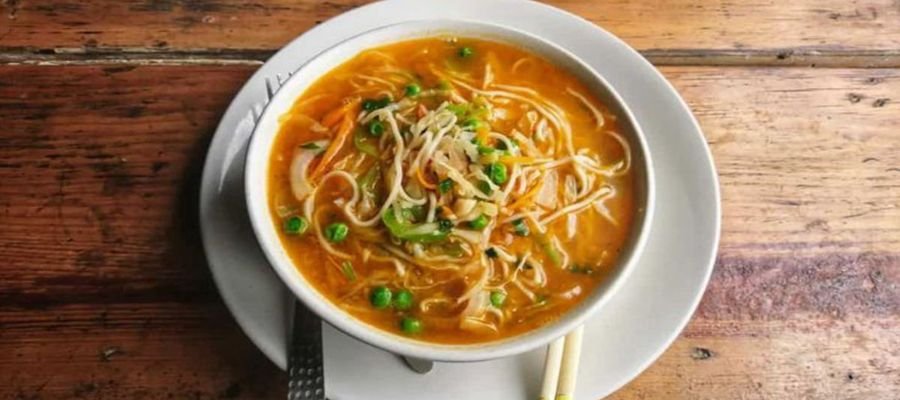
Thukpa is a comforting noodle soup with roots in the Himalayan region—especially Tibet, Nepal and Bhutan. In Indian hill stations and Tibetan markets, a hot bowl of thukpa is a winter favourite: clear yet flavourful broth, noodles, veggies (and sometimes meat), all in one wholesome, filling meal. It’s popular around monasteries, Tibetan colonies and small cafés where travellers stop to warm up.
History & Local Story
Thukpa is believed to have originated in Tibet as a simple noodle soup made with hand-pulled or hand-cut noodles simmered in a light broth with vegetables or meat. It spread across the Himalayan belt with Tibetan and Nepali communities, slowly adapting to local ingredients and tastes.
In India, thukpa became popular in places like Ladakh, Himachal, Sikkim and hill towns with Tibetan settlements. As it travelled, flavours changed: some versions are more garlicky, some use tomatoes and Indian spices, some stay very simple and mild. Today, “Tibetan thukpa” is commonly seen on menus next to momos, especially in market areas and college hubs.
What You’ll Taste
- Light yet flavourful broth – usually based on vegetables or chicken, with garlic, ginger and mild spices
- Soft noodles – wheat noodles or Hakka-style, cooked directly in the soup
- Mixed vegetables – cabbage, carrot, capsicum, spring onion and sometimes spinach or beans
- Optional protein – egg, chicken, paneer or tofu, depending on the stall
- Warm, cosy flavour – not very heavy, but filling and perfect for cool evenings or rainy days