
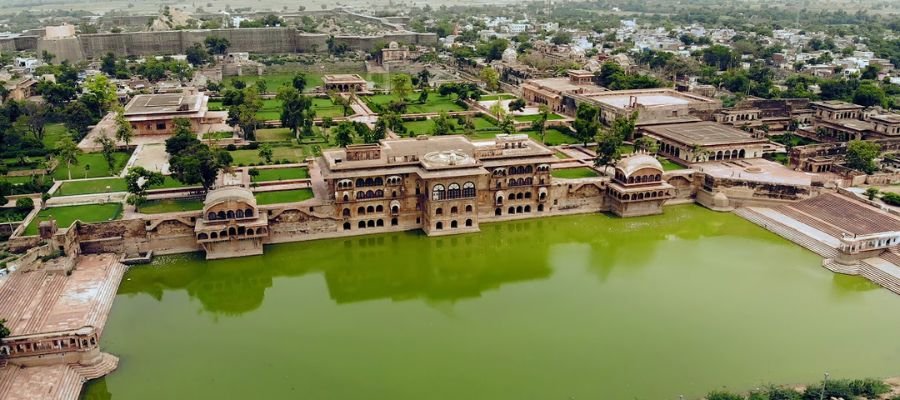
About 30–35 km from Bharatpur city, Deeg Palace is a spectacular complex of water palaces and gardens. Built around large tanks like Gopal Sagar and Rup Sagar, its pavilions—Gopal Bhawan, Suraj Bhawan, Keshav Bhawan, Nand Bhawan—stand right on the water’s edge, with arched façades reflected in the lake. Inside are colonnaded halls, marble inlay, jali screens and painted ceilings. The gardens follow the Mughal charbagh pattern with straight channels and more than 500 fountains that can be activated during special occasions, sometimes coloured for festival shows. On a quiet day the combination of water, stone and greenery makes Deeg feel like a dreamy summer resort, especially at sunrise or just before sunset.
About this place
History & highlights
Deeg was the first capital of the Jat kingdom of Bharatpur. Maharaja Badan Singh, recognised as the formal founder of the state, developed Deeg in the early 18th century, and his successor Maharaja Suraj Mal (r. 1755–1763) greatly expanded the palace complex around 1772, drawing inspiration from the Mughal gardens of Agra and Delhi but giving them a distinct Hindu–Rajput character. The palace served as a fortified summer retreat and occasional capital, strategically located near the imperial cities yet protected by walls and a moat. Notable features include Keshav Bhavan, designed as a monsoon pavilion where hidden pipes could create artificial rain and thunder, and Suraj Bhavan, later faced in white marble. After Suraj Mal’s death, the royal family shifted focus back to Bharatpur, but Deeg remained in use into the 20th century. Today the Archaeological Survey of India manages it as a monument, and it comes alive during Braj Holi events when fountains run with coloured water, reviving its old festival glory.
Reviews
No reviews yet. Click “Write a Review” above to share your experience.