
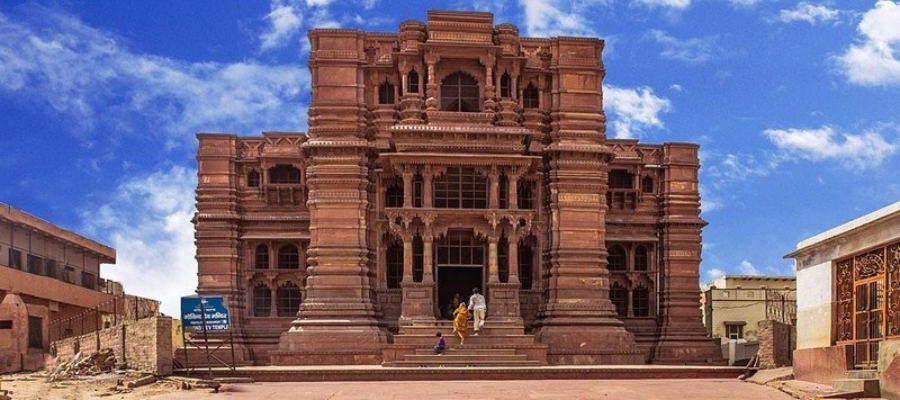
Govind Dev Ji Temple is one of Vrindavan’s most impressive historic structures, standing like a red-sandstone fortress in the old town. Even in its reduced height, the multi-storey haveli-style building with high arches and massive pillars dominates the skyline. Inside, the sanctum today houses a replica deity while the original idol of Govind Dev Ji is enshrined in Jaipur, yet pilgrims still come to honour this powerful seat of Krishna worship. The temple courtyards and surrounding ruins convey a sense of the grandeur Vrindavan enjoyed under Mughal-Rajput patronage in the 16th–17th centuries.
About this place
History & highlights
The deity of Govind Dev Ji, traditionally said to have been carved by Krishna’s great-grandson Bajranabh, was rediscovered in Vrindavan by Rupa Goswami in the 16th century. To house this ancient idol, a small temple was first built at Goma Tila in 1525, and later a monumental seven-storey structure was commissioned by Raja Man Singh of Amber around 1570–1590, using red sandstone reportedly granted by Emperor Akbar. During Aurangzeb’s reign in the 1670s, the top storeys were destroyed and the deity was moved to safety in Rajasthan, leaving behind the powerful shell seen today. Modern conservation efforts by ASI and local groups highlight the temple as a masterpiece of Braj-Mughal architecture and an important symbol of Hindu-Muslim cultural interactions in early modern India.
Reviews
Sirman sharma
★★★★ ☆
A very peaceful and historic temple in Vrindavan