
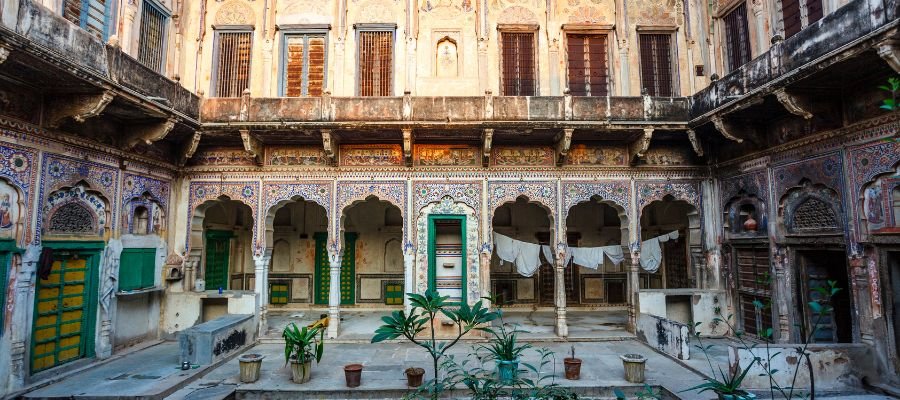
The heart of Mandawa Havelis is a grid of lanes lined with ornate merchant havelis. Famous examples include Goenka Double Haveli, Hanuman Prasad Goenka Haveli, Jhunjhunwala Haveli, Murmuria Haveli, Bansidhar Newatia Haveli, Gulab Rai Ladia Haveli and others. Many façades have big painted panels of gods, maharajas on elephants, British officers, steam locomotives, even Venice scenes and early aeroplanes. Inner courtyards show Ragmala themes, Krishna leelas and family portraits, sometimes with ceilings almost completely covered in tiny narrative scenes. Even where plaster peels, the combination of frescoes, carved doors and wrought-iron balconies is stunning for photography and slow heritage walks.
About this place
History & highlights
Most Mandawa havelis were built or heavily repainted in the late 19th and early 20th centuries, when Mandawa’s trading families – especially Goenkas, Jhunjhunwalas, Chokhanis, Ladias and others – reinvested their Calcutta/Bombay profits into showpiece homes. Older murals focused on Hindu myths, royal hunts and court life; by the Raj era, artists painted railway trains, clocks, gramophones, European ladies, King George V and nationalist figures like Nehru on horseback, reflecting changing technology and politics. Many owners left post-Independence; some havelis are being restored as boutique hotels or museums, while others are in danger of collapse – which is why state heritage projects now list Mandawa havelis for priority conservation.
Reviews
No reviews yet. Click “Write a Review” above to share your experience.