
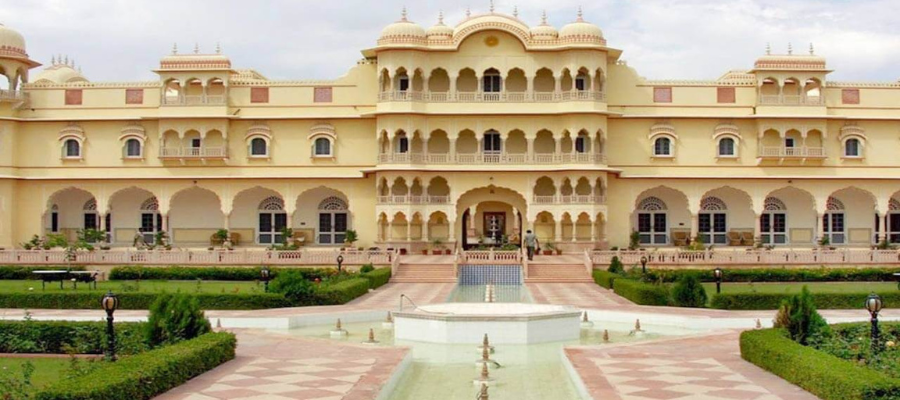
Nahargarh Fort stretches along the crest of the Aravalli hills, forming a dramatic stone spine above Jaipur. From its ramparts and rooftop terraces you get some of the best panoramic views of the Pink City, especially at sunset when the city lights come on below. Inside, the highlight is Madhavendra Bhawan, a palace suite built around a courtyard with a series of identical apartments for the queens, each connected to the king’s rooms by secret passages. The interiors combine painted arches, stucco work and frescoes, giving a glimpse of royal leisure life – in sharp contrast to the stark outer fort walls. Cafés and viewpoints at the top make Nahargarh not just a historic bastion but also a favourite hangout for locals and tourists.
About this place
History & highlights
Nahargarh was constructed in 1734 by Sawai Jai Singh II as part of the defensive ring with Amer and Jaigarh, originally called Sudershangarh. Over time it became known as Nahargarh, popularly interpreted as “abode of tigers” but also linked by legend to the spirit of Nahar Singh Bhomia, said to have disturbed the fort’s construction until a temple was built in his honour inside the walls. The fort was expanded in the 19th century under Sawai Ram Singh and Sawai Madho Singh II, who added the palace apartments now seen in Madhavendra Bhawan. While Nahargarh never witnessed major battles, it played roles as a refuge for the royal family during times of unrest, including the 1857 uprising. In the modern era, the fort and the adjacent wildlife sanctuary have become symbols of Jaipur’s natural as well as built heritage, though issues like encroachment and tourism pressure continue to be debated.
Reviews
No reviews yet. Click “Write a Review” above to share your experience.