
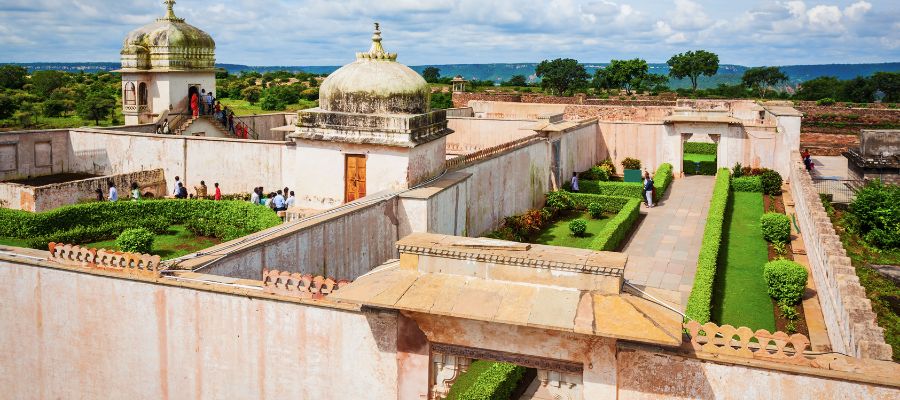
Padmini Palace stands in the middle of a rectangular water tank within the fort, connected to the shore by causeways. The three-storey white structure, with chhatri-topped pavilions and arched windows, reflects in the still water, creating one of Chittorgarh’s most photographed scenes. A separate pavilion at the edge of the tank is pointed out as the place from which Sultan Alauddin Khalji is said to have glimpsed Rani Padmini’s reflection in a mirror, according to legend. The palace itself is modest in size but powerful in atmosphere because it is so tied to stories of beauty, betrayal and jauhar.
About this place
History & highlights
Historically, the exact date of Padmini Palace’s construction is debated; the existing structure is usually placed around the 14th–15th century, though it may have earlier foundations. The legend of Rani Padmini (or Padmavati) was popularised in the 16th-century epic Padmavat by Malik Muhammad Jayasi: Alauddin Khalji besieges Chittor after hearing of Padmini’s beauty; she allows him only to see her reflection from this palace; later, facing inevitable defeat, she and thousands of women commit jauhar rather than be captured. While historians debate how much of this story is literal, the site has become a powerful memorial to Rajput notions of honour and sacrifice, and is a key stop on heritage tours.
Reviews
No reviews yet. Click “Write a Review” above to share your experience.