
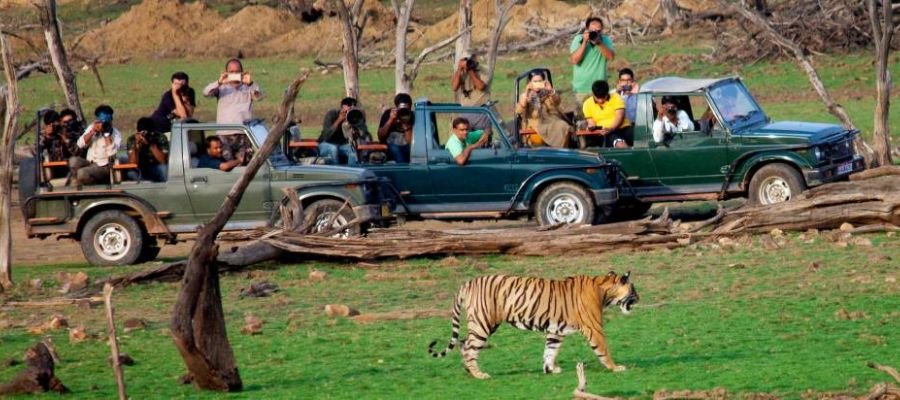
Ranthambore National Park is a mix of dry deciduous forest, rocky hills, grassland and ancient ruins, spread around the historic Ranthambore Fort. On safari you drive through valleys with dhok trees, open meadows, rocky outcrops and lakes where sambar deer, crocodiles and birds gather. The park is famous for its relatively bold Bengal tigers, often seen resting on old walls, near lakes or on dusty tracks, which is why wildlife photos from Ranthambore have a dramatic “tiger in a ruined kingdom” look. Safari zones (1–10) include scenic areas like Lakki, Kachida Valley, Rajbagh, Padam Talao, Malik Talao, each with different chances to see tigers and other wildlife such as leopards, sloth bears, hyenas, wild boar and hundreds of bird species.
About this place
History & highlights
The area was notified as Sawai Madhopur Game Sanctuary in 1955. In 1973, it became one of India’s first nine Project Tiger reserves, and in 1980 the core was declared Ranthambore National Park. Earlier, these forests were the royal hunting grounds of the Jaipur rulers, who built hunting lodges and lakes here. Under Project Tiger, villages inside the core were relocated (12 shifted between 1976–79) to create inviolate habitat. In recent years, Ranthambore’s tiger population has rebounded so strongly that the reserve is facing overcrowding of tigers, leading to relocation plans to other reserves like Mukundra Hills. The park is now a flagship site for tiger conservation and eco-tourism in India, while also dealing with challenges like human–wildlife conflict, tourism pressure and habitat fragmentation.
Reviews
No reviews yet. Click “Write a Review” above to share your experience.