
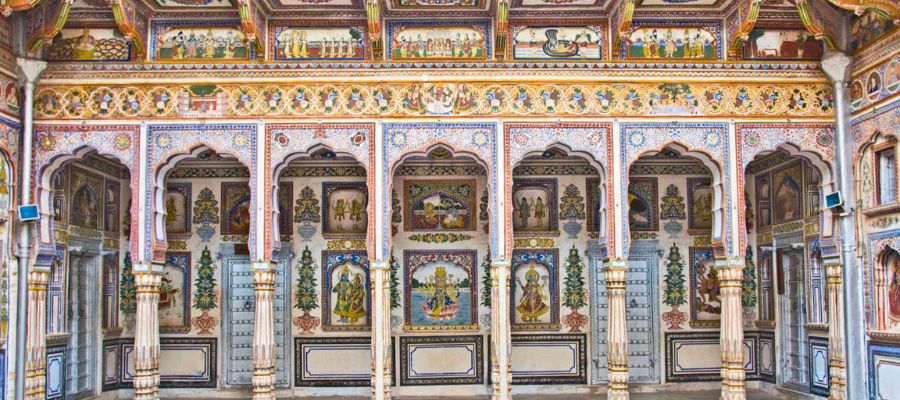
Shekhawati Painted Havelis Between Jhunjhunu, Nawalgarh, Mandawa and nearby towns you see hundreds of frescoed havelis – large courtyard mansions with painted façades, arched gateways, jharokhas and carved doors. Many lanes still feel like an open-air art gallery: outer walls show elephants, processions and deities; inner courtyards have more intimate scenes, European trains, cars, steamships and even aeroplanes. Some havelis are restored as museums or heritage hotels, others lie half-abandoned with fading but still beautiful murals. Walking here is all about slowly exploring alleys, peeking into courtyards and noticing details in every arch and balcony.
About this place
History & highlights
The region is named after Rao Shekha (15th c.), a Kachwaha Rajput whose descendants – the Shekhawat clan – ruled many small thikanas (estates) here. From around 1830 onwards, Marwari and Shekhawati merchants made big fortunes in Calcutta, Bombay and other trade centres and began investing money back home in grand mansions, temples, wells and chhatris, almost all painted with frescoes. The peak of wall-painting was late 19th–early 20th century, when artists mixed traditional themes (Krishna, epics, local rulers) with images of trains, clocks, Victorian ladies and political leaders. After mid-20th century, many families moved permanently to big cities, leaving houses locked or rented; neglect means numerous havelis have decayed or been demolished. Today Rajasthan Tourism and heritage groups are working on restoration and legal protection of key painted havelis in Jhunjhunu, Sikar and Ramgarh to save this unique art heritage.
Reviews
No reviews yet. Click “Write a Review” above to share your experience.