
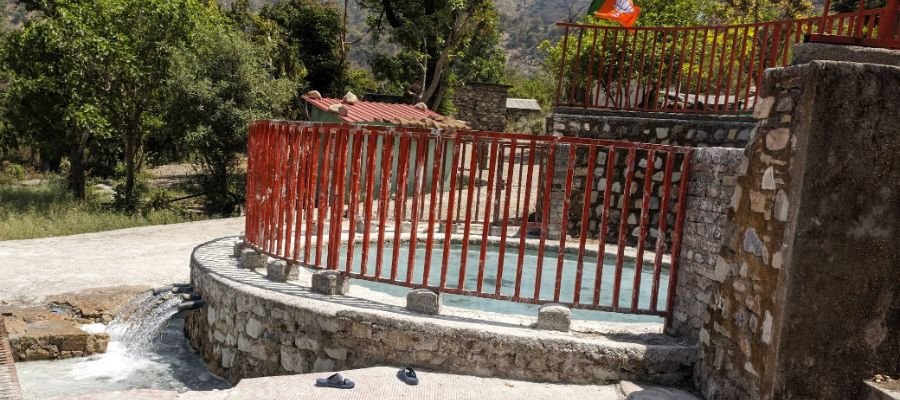
Gandhak Ka Paani: Dehradun’s Quiet Sulphur Pool That Locals Have Always Known About
Every city has a version of this — the place that doesn’t appear in the official tourism literature, that exists primarily in the knowledge of people who grew up nearby, passed down the way local knowledge tends to be: through a cousin who mentioned it once, a neighbour who swears by it for his knees, an uncle who used to bring the family here before the more famous spots got too crowded to be worth the effort. Dehradun’s version is a small, greenish-blue pool fed by natural sulphur springs, tucked into the quieter folds of the valley on the Maldevta side, and if you haven’t heard of it, that’s mostly because the people who know it best haven’t been in any particular hurry to share it.
Locals call it gandhak ka paani — sulphur water, named with the blunt practicality that Garhwali place-naming tends to favour. It doesn’t need a more elaborate title. The name tells you exactly what it is and exactly what you’re going for.
Finding It Is the First Test
The pool sits in the terrain between Maldevta and the Ghuttu side of the Dehradun valley — a landscape that most tourists bypass entirely in favour of Mussoorie above or Rishikesh below. This is hill country that hasn’t been tidied up for visitors: fields give way to scrub, scrub gives way to rocky outcrops, and the path to the pool is the kind of route that requires either local guidance or a willingness to ask questions and accept that the answers will be gestural rather than precise.
The walk in is short but genuinely off-road — not a paved trail with distance markers, not a forest department route with painted arrows. You’ll cross rough ground, possibly a seasonal stream depending on when you go, and navigate through vegetation that hasn’t been cleared back to create a comfortable corridor. None of this is difficult by any serious outdoor standard, but it does mean arriving in proper footwear and with the expectation that the journey will require some attention.
That mild effort functions as a natural filter. It keeps the pool from becoming what Sahastradhara — Dehradun’s more developed and better-known sulphur spring site — has gradually become: a destination with parking lots and snack stalls and enough infrastructure that the experience of visiting it has been largely standardised. Gandhak ka paani has none of that, and its regulars would like to keep it that way.
The Pool Itself
The basin is small and rocky, carved by water and time into the hillside with no human assistance. The water sits in it with a colour that takes a moment to process — a greenish-blue that doesn’t quite match anything you’d expect from a pool at this altitude, somewhere between the turquoise of glacial meltwater and the grey-green of deep forest shade. The sulphur content gives it that tint and gives the air around it the faint, unmistakable smell that Dehradunites of a certain generation associate immediately with the word gandhak: not unpleasant exactly, but distinctly mineral, distinctly alive.
The temperature of the water varies with season and with how much recent rainfall has diluted the spring feed, but it runs cooler than you’d expect from a geothermal source — this is not a hot spring in the Himalayan tradition, more a mineral-rich cold pool with a reputation that has accumulated over decades of local use.
The surroundings are forested and unhurried. There are no benches arranged for viewing, no cemented ghats for easy entry. The rocks around the pool’s edge are worn smooth in places by the repeated presence of people who’ve been coming here long before anyone thought to write about it, and that smoothness is the only concession the place makes to human comfort.
The Belief in the Water
You will not have to be at the pool long before you understand that most people here are not treating this as a scenic stop. They have come specifically for the water, and they interact with it with the careful, deliberate manner of people who believe they are doing something genuinely therapeutic.
The faith in sulphur water’s healing properties is old and widespread across northern India — not fringe belief but embedded folk medicine, the kind that sits comfortably alongside both Ayurvedic tradition and the lived experience of people who’ve tried it and felt better. Joint pain, skin conditions, fungal infections, general inflammation — these are the complaints that bring people to gandhak ka paani, and the visitors you encounter here tend to be less the adventure-tourism crowd and more people of various ages who have made this trip before and will make it again.
Elderly men lower themselves carefully into the water, staying for twenty or thirty minutes with the patience of people following a prescribed course rather than taking a casual dip. Women sit at the edge with their feet submerged, talking quietly. Younger visitors sometimes look slightly uncertain about the temperature and the smell before committing, then stay longer than they intended. The atmosphere is less spa, more community — a shared use of something the land provides, governed by an informal etiquette that doesn’t need to be explained because it’s understood.
Whether the sulphur water delivers on the therapeutic promises made for it is a question that sits between traditional knowledge and clinical evidence, and the honest answer is that the research on balneotherapy — the formal term for mineral water bathing as treatment — is genuinely mixed. What is clear is that people have been making specific journeys to this specific pool for a long time, and they keep returning. That pattern of deliberate, repeated use is its own kind of evidence, even if it isn’t the double-blind kind.
Compared to Sahastradhara
Sahastradhara is the reference point anyone from Dehradun will reach for when trying to explain what gandhak ka paani is, and the comparison is useful precisely because of how much the two differ. Sahastradhara has been a formal tourist destination for decades — it has been developed, expanded, and made accessible to the point where visiting it on a weekend feels less like encountering a natural spring and more like attending a moderately busy theme park with a geological feature at its centre.
The sulphur pool near Maldevta is Sahastradhara’s opposite in almost every respect. No entry fee, no ropeway, no stalls selling corn and ice cream. Just the pool, the rocks, the smell of minerals in the air, and whoever else has made the walk in that day. For visitors who know both and have the option of choosing, the choice tends to come down to a simple question: do you want the experience of a natural sulphur spring, or do you want the amenities that have grown up around one?
When to Go and What to Bring
The pool is accessible year-round, but the best visits happen between October and March, when Dehradun’s heat has eased and the approach through scrub and field is dry underfoot. The monsoon months bring lush surroundings but wet, slippery ground and the reasonable possibility that the pool’s water level and clarity will be affected by runoff.
Go early in the morning if you want quiet — the pool sees its heaviest local use in the late morning and early afternoon on weekends. Carry water for the walk in. Wear shoes that can handle uneven, occasionally muddy ground. There are no changing facilities, so plan your clothing accordingly if you intend to get into the water. And bring something to sit on if you plan to stay a while, because the rocks, however worn smooth they may be, remain rocks.
Tell someone where you’re going, take a local contact number if you can get one, and approach the whole thing with the unhurried flexibility that off-the-beaten-path places in the Dehradun valley quietly require. This is not a place that rewards rushing.
Gandhak ka paani has survived this long as a local secret — or at least a local preference — by being slightly inconvenient to reach and entirely uninterested in performing for visitors. Arrive on its terms, and it gives back something that most developed tourist sites in the region simply can’t: the feeling of having found something real.