
The Taj Mahal is a breathtaking white-marble mausoleum on the right bank of the Yamuna River in Agra, world-famous as a symbol of love and perfection in Mughal architecture. Its central onion dome, slender minarets, intricate pietra-dura inlay work, calligraphy panels, and symmetrical charbagh garden create a stunning visual harmony that changes colour with the light of dawn, day and moonlit nights. Visitors experience not only the beauty of the main tomb but also the red-sandstone mosque, guest house, and monumental gateway that frame the complex and give it a serene, almost ethereal atmosphere. Today the Taj Mahal is a UNESCO World Heritage Site and one of the most visited monuments on the planet, drawing travellers, photographers, historians and couples from all over the world.
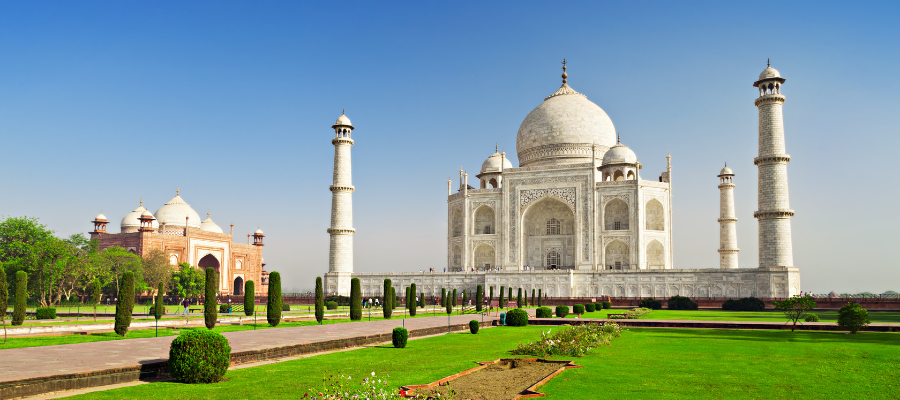
About this place
History & highlights
The Taj Mahal was commissioned by the Mughal emperor Shah Jahan in the 17th century in memory of his favourite wife, Mumtaz Mahal, who died in 1631. Construction started around 1632 and continued for roughly two decades, involving thousands of artisans under the guidance of master architect Ustad Ahmad Lahori. Built between about 1631–1648 in finely carved Makrana marble, the complex showcases the zenith of Indo-Islamic and Mughal architectural traditions and elaborate garden planning. Over time, the monument survived political upheavals and periods of neglect, but it was recognised early as a treasure of world heritage and was formally inscribed as a UNESCO World Heritage Site in 1983. Today it is preserved by the Archaeological Survey of India and remains a powerful reminder of the Mughal era’s artistic and engineering genius.
Reviews
No reviews yet. Click “Write a Review” above to share your experience.