
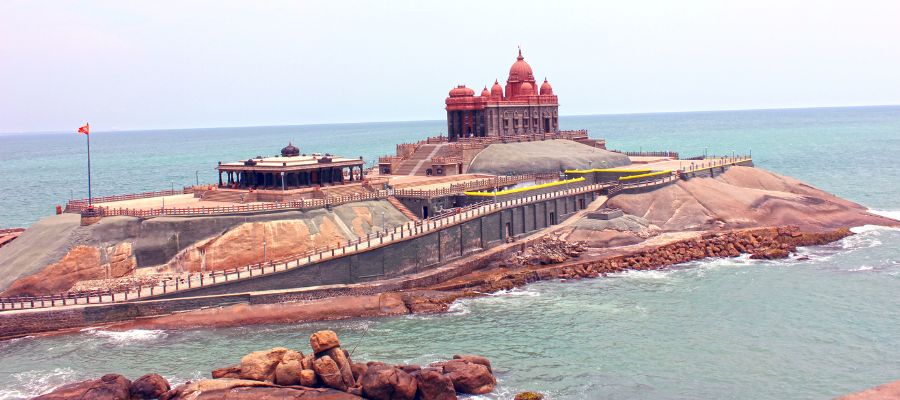
Introduction: A Spiritual and National Memorial at India’s Southern Tip
The Vivekananda Rock Memorial is one of the most significant spiritual and cultural monuments in India, located on a rocky islet off the coast of Kanyakumari in Tamil Nadu. Situated near the point where the Arabian Sea, Bay of Bengal, and the Indian Ocean meet, the memorial commemorates Swami Vivekananda, the renowned Indian philosopher and spiritual leader. The site is closely associated with Vivekananda’s meditation on the rock in 1892, which is believed to have influenced his later teachings and global mission.
For visitors, the memorial represents a unique blend of spirituality, architecture, and coastal geography. It stands as a major landmark that connects India’s philosophical heritage with its geographical extremity.
Historical Background and Inspiration
The idea of constructing a memorial dedicated to Swami Vivekananda emerged in the mid-20th century, decades after his visit to Kanyakumari. Vivekananda’s meditation on the rock was seen as a turning point in his spiritual journey, preceding his participation in the Parliament of the World’s Religions in Chicago in 1893.
Recognising the historical and spiritual importance of the site, cultural leaders and national organisations proposed the creation of a permanent memorial. The project received support from public institutions, spiritual organisations, and the Government of India. After years of planning, fundraising, and design work, construction of the memorial began in the 1960s.
The memorial was inaugurated in 1970, transforming the isolated rock into a structured spiritual and cultural monument accessible to visitors from across India and abroad.
Architectural Design and Spatial Layout
Architecturally, the Vivekananda Rock Memorial combines elements of Indian temple architecture with modern monument design. The structure is built using granite and other durable materials suited to the harsh marine environment.
The memorial complex consists of two main sections: the Vivekananda Mandapam and the Shripada Mandapam. The Vivekananda Mandapam houses meditation halls, exhibition spaces, and viewing platforms, while the Shripada Mandapam marks the footprint traditionally associated with the rock.
A ferry system connects the mainland to the memorial, allowing visitors to cross the sea and explore the monument. The elevated platforms provide panoramic views of the ocean and surrounding coastline, making the memorial both a spiritual and visual landmark.
Spiritual and Cultural Importance
The Vivekananda Rock Memorial holds deep significance in India’s spiritual and intellectual history. It represents the connection between Vivekananda’s philosophy and the geographical setting that inspired his reflections.
The memorial has become a centre for meditation, contemplation, and cultural learning. Visitors from diverse backgrounds engage with Vivekananda’s ideas through exhibitions, guided tours, and quiet reflection within the halls.
Beyond spirituality, the memorial functions as a cultural symbol that links India’s modern intellectual heritage with its ancient philosophical traditions.
Experience for Visitors and Travellers
For visitors, the Vivekananda Rock Memorial offers a layered experience combining ferry travel, monument exploration, and ocean views. The journey across the sea itself forms an important part of the visit, creating a sense of transition from the mainland to a sacred space.
Tourists explore the meditation halls, walk through viewing corridors, and observe the surrounding seascape. Cultural travellers engage with exhibits on Vivekananda’s life and teachings, while photographers are drawn to the dramatic coastal setting.
The memorial is often visited alongside nearby landmarks such as the Thiruvalluvar Statue, Kanyakumari Beach, and the Bhagavathy Amman Temple, making it a central element of the town’s tourism circuit.
Role in Kanyakumari’s Cultural and Tourism Identity
The Vivekananda Rock Memorial plays a defining role in shaping Kanyakumari’s identity as a destination where spirituality, history, and geography intersect. Along with natural and religious landmarks, the memorial contributes to the town’s reputation as a place of national and cultural significance.
The monument has influenced infrastructure development, ferry services, and visitor facilities in the coastal zone. It also serves as a focal point for educational tours, spiritual retreats, and cultural events associated with Vivekananda’s legacy.
Within the broader context of India’s public monuments, the memorial stands as a distinctive example of a modern structure rooted in spiritual and historical inspiration.
Vivekananda Rock Memorial in the Present Context
Today, the Vivekananda Rock Memorial continues to function as one of India’s most visited spiritual monuments. Regular maintenance, safety measures, and visitor management systems ensure the preservation of the structure and its accessibility to the public.
The memorial attracts large numbers of pilgrims, tourists, students, and international visitors throughout the year, reinforcing Kanyakumari’s position as a major cultural and spiritual destination. At the same time, it remains a space for meditation and reflection, connecting Vivekananda’s legacy with contemporary public life and ongoing interest in India’s philosophical heritage.